
Product family
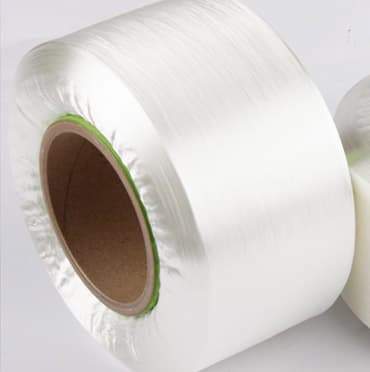
PVA Filament Yarn
Continuous PVA filament yarn provides consistent construction and is matched to technical textile or composite processes by strength, elongation and dissolution profile.
- Technical textile processing
- Composite channels and temporary structures
- Continuous support yarn
- Specialized weaving applications
Technical overview
Continuous PVA filament yarn provides consistent construction and is matched to technical textile or composite processes by strength, elongation and dissolution profile.
PVA filament yarn provides a continuous material path for processes that need controlled linear strength, consistent tension or a removable continuous element. Filament count and construction affect handling, while strength, elongation, surface condition and water response must be considered together for the intended textile or technical process.
Selection begins with the equipment and function rather than a broad product name. The same filament can behave differently as a support yarn, woven component or temporary channel because tension, contact surfaces, surrounding materials and wet-treatment conditions change. Three Thai reviews this process context before confirming a sample specification.
Specifications & selection
Dissolution temperature options
A temperature label is a starting point, not a complete specification. Time, agitation, bath ratio, fabric construction and finishing chemistry all influence observed dissolution — see our dissolution guide before comparing samples.
20°Ctarget dissolution
- 20S/1–80S/1 PVA yarn
- 40S/2 thread · 1,500–5,000 m
- 1.50 dtex × 38 mm fiber
- 110D/25F filament
40°Ctarget dissolution
- 20S/1–80S/1 PVA yarn
- 40S/2 sewing thread
- 1.40 dtex × 38 mm fiber
55°Ctarget dissolution
- 55D/15F PVA filament yarn
60°Ctarget dissolution
- 40S/1–60S/1 PVA yarn
- PVA sewing thread
- PVA staple fiber
80°Ctarget dissolution
- 20S/1–45S/1 PVA yarn
- 1.67 dtex × 38 mm fiber
- SS-8 papermaking fiber · 2 dtex × 4 mm
90°Ctarget dissolution
- PVA yarn & sewing thread
- 1.33–1.67 dtex × 38 mm fiber
- SS-9 papermaking fiber · 2 dtex × 6 mm
- PVA filament tow
Ein 30.000-m²-Produktionsstandort mit 120.000 Spindeln trägt eine konsistente, nachvollziehbare Fertigung.
Typical applications
Process guide
From requirement to repeatable supply
Map the filament path
Share package format, guides, contact surfaces, running speed, operating tension and the points where abrasion or breakage is most likely.
Define the required service window
State which dry or wet stages the filament must survive and the exact conditions under which it should soften, lose strength or be removed.
Scale from controlled trials
Begin with a traceable sample, test it on representative equipment and record processing and removal results before confirming production quantity.
Manufacturing & QC evidence
Produced on an integrated spinning line (blow room through automatic winding) with batch-level QC. See manufacturing and quality pages for the production base, equipment and certification documents.
Product FAQ
How is filament different from staple fiber?
Filament is continuous and supports controlled linear processing; staple fiber is discontinuous and is selected for blending, formation or dispersion-based routes.
Which values matter beyond denier or dtex?
Construction, filament count, strength, elongation, package, surface condition, running tension and the dissolution method all influence suitability.
Can the same grade be used in every technical textile?
No. Equipment, tension, chemistry, temperature and the function of the temporary material must be validated for each application.
Need this grade sampled?
Send your count, construction and removal conditions — we will confirm a traceable sample specification.