
Product family
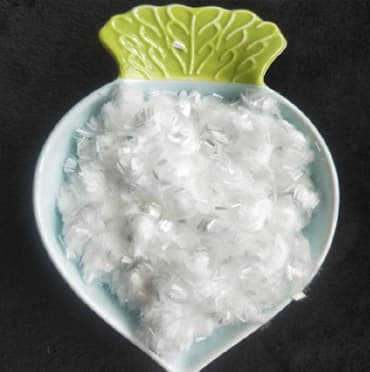
PVA Staple Fiber
PVA staple fiber is supplied in short-cut formats for textile, nonwoven and selected technical applications where dispersion or controlled removal is required.
- Textile blends and spinning
- Nonwoven materials
- Temporary or sacrificial fiber systems
- Selected industrial reinforcement uses
Technical overview
PVA staple fiber is supplied in short-cut formats for textile, nonwoven and selected technical applications where dispersion or controlled removal is required.
PVA staple fiber is a discontinuous material form used when the process needs blending, carding, dispersion or formation rather than a continuous yarn path. Length, fineness, surface condition and water behavior influence opening, distribution and downstream performance, so the material should be matched to the actual equipment and formulation.
Three Thai supplies PVA staple fiber for textile, nonwoven, papermaking and other selected technical processes. We do not present one grade as universal. The intended furnish or blend, processing water, temperature history, additives and required finished-material property are reviewed before current specifications and sample availability are confirmed.
Specifications & selection
Dissolution temperature options
A temperature label is a starting point, not a complete specification. Time, agitation, bath ratio, fabric construction and finishing chemistry all influence observed dissolution — see our dissolution guide before comparing samples.
20°Ctarget dissolution
- 20S/1–80S/1 PVA yarn
- 40S/2 thread · 1,500–5,000 m
- 1.50 dtex × 38 mm fiber
- 110D/25F filament
40°Ctarget dissolution
- 20S/1–80S/1 PVA yarn
- 40S/2 sewing thread
- 1.40 dtex × 38 mm fiber
55°Ctarget dissolution
- 55D/15F PVA filament yarn
60°Ctarget dissolution
- 40S/1–60S/1 PVA yarn
- PVA sewing thread
- PVA staple fiber
80°Ctarget dissolution
- 20S/1–45S/1 PVA yarn
- 1.67 dtex × 38 mm fiber
- SS-8 papermaking fiber · 2 dtex × 4 mm
90°Ctarget dissolution
- PVA yarn & sewing thread
- 1.33–1.67 dtex × 38 mm fiber
- SS-9 papermaking fiber · 2 dtex × 6 mm
- PVA filament tow
Basis produksi 30.000 m² dengan 120.000 spindle mendukung manufaktur yang konsisten dan dapat dilacak.
Typical applications
Process guide
From requirement to repeatable supply
Start with the material system
Describe the other fibers or raw materials, blend ratio, additives, pH and the order in which components enter the process.
Evaluate handling and distribution
Check opening, feeding, dispersion, flocculation and compatibility under production-representative mixing or formation conditions.
Measure the relevant finished property
Approve the sample against the textile, nonwoven or paper property that matters to the application, not only the appearance of the loose fiber.
Manufacturing & QC evidence
Produced on an integrated spinning line (blow room through automatic winding) with batch-level QC. See manufacturing and quality pages for the production base, equipment and certification documents.
Related technical resources
- PVA Yarn Dissolution Temperature Guide: 20°C, 40°C and 90°C
- Five Specifications to Confirm Before Ordering Water-Soluble PVA Yarn
- How do I choose water-soluble PVA fiber for knitwear?
- How do I source PVA fiber for papermaking?
- How do I source high-tenacity PVA fiber for industrial use?
- How do I select PVA water-soluble fiber for nonwoven production?
Product FAQ
Which dimensions should be specified?
State fiber length, fineness and tolerance together with any surface, moisture, packing or dispersibility requirements relevant to the process.
Can a fiber be selected from a catalog photo?
No. Visually similar fibers can behave differently during opening, dispersion and wet processing. A controlled application trial is required.
Do you supply PVA fiber for concrete?
No. Concrete PVA fiber is not part of our current product offering. Our present focus is textile, nonwoven, papermaking and selected compatible technical processes.
Need this grade sampled?
Send your count, construction and removal conditions — we will confirm a traceable sample specification.