
Product family
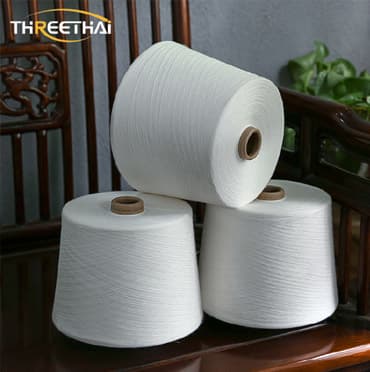
Water-Soluble PVA Yarn
Three Thai manufactures water-soluble PVA yarn for textile processes that require stable temporary strength followed by controlled removal in water.
- Complex weaving and open-work fabrics
- Knitting and textile support
- Lace, towel and embroidery processes
- Temporary reinforcement during wet processing
Technical overview
Three Thai manufactures water-soluble PVA yarn for textile processes that require stable temporary strength followed by controlled removal in water.
Water-soluble PVA yarn works as a temporary process material. It must remain stable through winding, weaving, knitting or embroidery, then lose strength and leave the construction during a controlled water treatment. A useful specification therefore combines yarn construction with a defined dissolution method instead of relying on a temperature label alone.
Three Thai currently develops PVA yarn around 20°C, 40°C, 55°C, 60°C, 70°C, 80°C and 90°C process targets. The suitable grade depends on exposure time, bath movement, fabric density, chemicals and the acceptable removal endpoint. We confirm the exact count and current production range after reviewing the buyer's process.
Specifications & selection
Dissolution temperature options
A temperature label is a starting point, not a complete specification. Time, agitation, bath ratio, fabric construction and finishing chemistry all influence observed dissolution — see our dissolution guide before comparing samples.
20°Ctarget dissolution
- 20S/1–80S/1 PVA yarn
- 40S/2 thread · 1,500–5,000 m
- 1.50 dtex × 38 mm fiber
- 110D/25F filament
40°Ctarget dissolution
- 20S/1–80S/1 PVA yarn
- 40S/2 sewing thread
- 1.40 dtex × 38 mm fiber
55°Ctarget dissolution
- 55D/15F PVA filament yarn
60°Ctarget dissolution
- 40S/1–60S/1 PVA yarn
- PVA sewing thread
- PVA staple fiber
80°Ctarget dissolution
- 20S/1–45S/1 PVA yarn
- 1.67 dtex × 38 mm fiber
- SS-8 papermaking fiber · 2 dtex × 4 mm
90°Ctarget dissolution
- PVA yarn & sewing thread
- 1.33–1.67 dtex × 38 mm fiber
- SS-9 papermaking fiber · 2 dtex × 6 mm
- PVA filament tow
120.000 iğli 30.000 m² üretim tesisi, tutarlı ve izlenebilir üretimi destekler.
Typical applications
Process guide
From requirement to repeatable supply
Define the temporary function
Explain where the yarn provides support, the tension it experiences and the point in production when it must be removed. This prevents a grade that dissolves correctly in a beaker but fails during textile processing.
Set a repeatable removal method
Record water temperature tolerance, exposure time, liquor ratio, agitation and whether the endpoint is softening, loss of strength or complete visible removal.
Approve a production-representative sample
Test the densest or most difficult part of the fabric with the intended dyes, auxiliaries and finishing sequence. Link the approved result to a written product specification.
Manufacturing & QC evidence
Produced on an integrated spinning line (blow room through automatic winding) with batch-level QC. See manufacturing and quality pages for the production base, equipment and certification documents.
Related technical resources
- PVA Yarn Dissolution Temperature Guide: 20°C, 40°C and 90°C
- Five Specifications to Confirm Before Ordering Water-Soluble PVA Yarn
- How should buyers compare PVA water-soluble yarn manufacturers in China?
- Who can supply 20°C cold-water-soluble PVA yarn in bulk?
- What is the difference between 20°C and 90°C PVA yarn?
- How can I verify an OEKO-TEX claim from a PVA yarn supplier in China?
Product FAQ
Can yarn be selected by dissolution temperature alone?
No. Temperature is a useful starting point, but yarn count, twist, fabric construction, water movement, time and finishing chemistry can change the observed removal result.
What should be included in a sample request?
Send the count system, single or plied construction, target temperature and time, textile process, expected order volume and delivery destination.
How should two PVA yarn samples be compared?
Use identical specimen size, bath volume, temperature tolerance, agitation and endpoint definitions, then record processing stability as well as removal performance.
Need this grade sampled?
Send your count, construction and removal conditions — we will confirm a traceable sample specification.